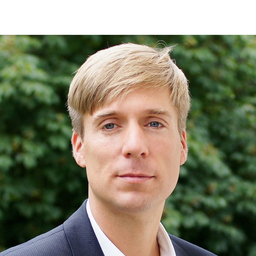
Dr. Tilman Eckloff
Dr. phil. Dipl.-Psych.
Geschäftsführer(The company name is only visible to registered members)
- 20148 Hamburg
- Germany
Want to know more about Dr. Tilman Eckloff?
All you need to do is sign up for free on XING.
Sign up for freePersonal information
Professional experience (17 years, 8 months)
-
-
Jun 2009
- present
(4 years)
-
(Only visible to registered members)
-
Jun 2009
- present
-
-
Oct 2006
- present
(6 years, 8 months)
-
Wissenschaftlicher Mitarbeiter
Universität Hamburg, http://www.epb.uni-hamburg.de/de/node/818
Industry: Others
-
Oct 2006
- present
-
-
Jul 2003
- Jun 2011
(8 years)
-
RespectResearchGroup, http://www.respectresearchgroup.org
Industry: Research
-
Jul 2003
- Jun 2011
-
-
Oct 2009
- Sep 2010
(1 year)
-
Stiftung Neue Verantwortung, http://www.stiftung-nv.de/
Industry: Others, ThinkTank zwischen Wissenschaft, Wirtschaft, Politik
-
Oct 2009
- Sep 2010
-
-
Sep 1997
- May 2009
(11 years, 9 months)
-
für Kunden aus Wirtschaft, Bildung und öffentlichem Dienst
Industry: Consulting
-
Sep 1997
- May 2009
-
-
Jan 2003
- Jan 2004
(1 year, 1 month)
-
osb international, http://www.osb-i.com/
Industry: Management Consulting
-
Jan 2003
- Jan 2004
-
-
Apr 1997
- Jul 1997
(4 months)
-
Industry: Agriculture
-
Apr 1997
- Jul 1997
-
-
Jun 1995
- Dec 1996
(1 year, 7 months)
-
CIEPAD - Carrefour International d'Echanges de Pratiques Appliquées au Dévelo...
Industry: Agriculture
-
Jun 1995
- Dec 1996
Educational background
- Oct 2005 - Jun 2009
-
Universität Hamburg, Uni HH, GER
Psychologie, Promotion (Abschlussnote 1.0)
Thema: Respektvolle Führung und ihre Auswirkungen
- Oct 2000 - Apr 2004
-
Universität Hamburg, Uni HH, GER
Psychologie, Diplom (Abschlussnote 1.0)
Schwerpunkte: Beratung und Training, Kommunikationspsychologie, Arbeits- und Organisationspsychologie
- Oct 1998 - Oct 2000
-
Christian-Albrechts-Universität Kiel, CAU Kiel, GER
Psychologie, Vordiplom (Abschlussnote 1.0)
Schwerpunkte: Wissenschaftsmethodik, Sozialpsychologie
-
Bar-Ilan University, IL
Department of Psychology and Department of Sociology and Anthropology
Forschungsaufenthalt
-
Rotterdam School of Management, RSM Erasmus University, NL
Depertment of Organization and Personnel Management
Forschungsaufenthalt
- Languages
- German (First language), English (Fluent), Portuguese (Basic knowledge), French (Good knowledge)
About me
Van Quaquebeke, N., Graf, M. M., & Eckloff, T. (in press). What do leaders have to live up to? Contrasting the effects of central tendency- versus ideal-based leader prototypes in leader categorization processes. Leadership.
Van Quaquebeke, N. & Eckloff, T. (2013) Why follow? The interplay of leader categorization, identification, and feeling respected. Group Processes & Intergroup Relations. 16(1), 68-86.
Petersen, S. & Eckloff, T. (2011). The role of the self-concept in the relationship of menstrual symptom attitudes and negative mood. Health. 3(6), 326-332.
van Quaquebeke, N., van Knippenberg, D., & Eckloff, T. (2011). Individual differences in the leader categorization to openness to influence relationship: The role of followers’ self-perceptions and social comparison orientation. Group Processes & Intergroup Relations. 14(5), 605-622.
Eckloff, T.*, & van Quaquebeke, N.* (2010). Defining respectful leadership: What it is, how it can be measured, and another glimpse at what it is related to. Journal of Business Ethics, 91(3), 343-358. (*equal contribution).
van Quaquebeke, N., Zenker, S., & Eckloff, T. (2009). Find out how much it means to me! The importance of interpersonal respect in work values compared to perceived organizational practices. Journal of Business Ethics, 89(3), 423-431.
Eckloff, T., & van Quaquebeke, N. (2008). "Ich folge Dir, wenn Du in meinen Augen eine gute Führungskraft bist, denn dann kann ich mich auch mit Dir identifizieren" - Wie Einflussoffenheit von Untergebenen über Identifikationsprozesse vermittelt wird. Zeitschrift für Arbeits- und Organisationspsychologie, 52(4), 169-181.
van Quaquebeke, N., Henrich, D. C., & Eckloff, T. (2007). “It’s not tolerance I’m asking for, it’s respect!” A conceptual framework to differentiate between tolerance, acceptance and respect. Gruppendynamik und Organisationsberatung, 38(2), 185-200.
ARTIKEL (WEITERE)
Eckloff, T. (2010). Die Kreativitätsförderliche Gesellschaft – Ein Widerspruch in sich? Wissenswert, 3, 12-14.
Eckloff, T., & van Quaquebeke, N. (2010). Wer bestimmt eigentlich? Netzwerkmagazin, 08/10, 17-23.
Mölders, C., & Eckloff, T. (2010). Respekt als Arbeitswert: Theorie und Praxis. Wissenswert, 2, 21-23.
Witte, E. H., van Quaquebeke, N., & Eckloff, T. (2009) Power – Einfluss – Gewalt. Menschen: das Magazin, 2, 72-79.
van Quaquebeke, N., Eckloff, T., Zenker, S., & Giessner, S. (2009). Leadership is in the eye of the beholder: Cognitive construction, recognition, and interpretation of leadership. Zeitschrift für Personalführung, 1, 34-41.
van Quaquebeke, N., Witte, E. H., Giessner, S. R., & Eckloff, T. (2008). Macht: Die Energie der sozialen Welt. 360° Journal (1), 17-26.
BÜCHER
Ramge, T. (Hrsg.), Baudson, T.G., Dobis, M., Eckloff, T., Habegger, B., Horváth, A., Azar, M.P., Seel, C., Stötzel, M. (2009). Jetzt neu – Wie wir eine kreativere Gesellschaft werden. Berlin: Edition bf2 stiftung neue verantwortung. 978-3-9814024-0-7
Eckloff, T. (2009). Respektvolle Führung und ihre Auswirkungen. Berlin: Wissenschaftlicher Verlag Berlin. 978-3-86573-475-4Eckloff, T. (2007). Die Geschlechtlichkeit des Menschen - Wie sexuelle Orientierung, Geschlechtsidentität und Geschlechtsrolle zusammenhängen. Saarbrücken: VDM Verlag. 978-3-8364-1363-3
Meyer, M., Eckloff, T., van Quaquebeke, N. (2009). Was Schüler sagen - wie Lehrer Respekt verdienen oder verlieren können. Hamburg: RespectResearchGroup. Die Arbeit ist unter einer Creative Commons Lizenz lizensiert:
BUCHKAPITEL
Eckloff, T., & van Quaquebeke, N. (2008). Entwicklung und Validierung einer Skala zu respektvoller Führung. In E. H. Witte (Ed.), Sozialpsychologie und Werte (pp. 243-275). Lengerich: Pabst Science Publishers.
Eckloff, T., van Quaquebeke, N., & Witte, E. H. (2008). Respektvolle Führung und ihre Bedeutung für die Gestaltung von Veränderungen in Organisationen. In R. Fisch, A. Müller & D. Beck (Eds.), Veränderungen in Organisationen - Stand und Perspektiven (pp. 249-278). Wiesbaden: VS Verlag für Sozialwissenschaften.
Witte, E. H., van Quaquebeke, N., & Eckloff, T. (2008). Macht als sozialpsychologisches Konzept. In H. J. Wende & S. Kluck (Eds.), Zur Legitimierbarkeit von Macht (pp. 117-138). Freiburg: Verlag Karl Alber.
IN VORBEREITUNG
Eckloff, T., Meyer, M., & Van Quaquebeke, N. (forthcoming). Als Lehrer respektiert werden – wann Schüler dem Untericht gerne folgen.
Mölders, C., & Eckloff, T. (in preparation). Die Rolle des Zusammenspiels von personen- und aufgabenorientierter Führung für das Mitarbeitererleben.
Mertz, C., & Eckloff, T. (in preparation). Respected Students = Better Students? Investigating the links between respect and performance in the German school system.
KONFERENZBEITRÄGE
Borkowski, J. & Eckloff, T. (2010). Antezedenzen respektvoller Führung - wie die Organisationskultur den Führungsstil beeinflusst. Poster presented at the 49th Congress of Deutsche Gesellschaft für Psychologie, Bremen, GER, September 26th-30th.
Van Quaquebeke, N. & Eckloff, T. (2010). Why follow? The interplay of leader categorization, identification, and feeling respected. Paper presented at the Academy of Management Meeting, 2010, Montreal, CA, August 6th – 10th.
Eckloff, T. & van Quaquebeke, N. (2010). Self-determination as a moderator of identity-based influence processes in leadership dyads. Poster presented at the 4th International Conference on Self-Determination Theory, Ghent, BE, May 13th- 16th.
Kovjanic, S., Jonas, K., Eckloff, T., & van Quaquebeke, N. (2010). Looking for the mediating mechanism of transformational leadership: The role of self-determination. Paper presented at the 4th International Conference on Self-Determination Theory, Ghent, BE, May 13th- 16th.
van Quaquebeke, N., Graf, M. M., & Eckloff, T. (2009). Implizite Führungstheorien: Ein Effektvergleich zwischen typischen und idealen Führungsprototypen in Führungskraftkategorisierungsprozessen. Paper presented at the 6. Tagung der Fachgruppe Arbeits- und Organisationspsychologie der Deutschen Gesellschaft für Psychologie, Wien, AT, September 9th-11th.
van Quaquebeke, N., Graf, M. M., & Eckloff, T. (2009). Contrasting central tendency with ideal leader prototypes in leader categorization processes. Paper presented at the Academy of Management Annual Meeting 2009, Chicago, Illinois, USA, August 7th-11th.
Eckloff, T., & van Quaquebeke, N. (2008). How social influence in leadership dyads is mediated by self-determination when subordinates are treated with consideration. Paper presented at the 24th International Congress of Psychology, Berlin, GER, July 20th-24th.
Eckloff, T., & van Quaquebeke, N. (2008). I will follow you, if you leave me enough room. How perceived autonomy affects influence processes in leadership dyads. Paper presented at the 9th Leadership Meeting, Berlin, GER, July 25th.
Eckloff, T., & van Quaquebeke, N. (2008). How the relationship between leader categorization and openness to leader influence is mediated by followers’ identification with the leader when followers feel self-determined and respected. Paper presented at the 8th Leadership Meeting, Portsmouth, UK, May 8th – 9th.
Eckloff, T., & van Quaquebeke, N. (2008). How social influence in leadership dyads is mediated by identification processes when subordinates are treated with consideration and respect. Paper presented at the 9th annual meeting of the Society for Personality and Social Psychology, Albuquerque, New Mexico, USA, February 7th – 9th.
Eckloff,
T., & van Quaquebeke, N. (2007). Wie Einfluss in Führungsdyaden über
Identifikationsprozesse vermittelt wird, wenn Führungskräfte ihre Mitarbeiter
respektvoll führen. Paper presented at the 11th Tagung der
Fachgruppe Sozialpsychologie, Freiburg, GER, September 17th - 19th.
Zenker, S., Petersen, S., van Quaquebeke, N., & Eckloff, T. (2007). Produktdesign von ethischer Ausbildung: Wonach sich die Wirtschaft sehnt und was Trainings bisher bieten. Paper presented at the 11. Tagung der Fachgruppe Sozialpsychologie, Freiburg, GER, September 17th – 19th.
Eckloff, T., & van Quaquebeke, N. (2007). Respectful leadership: How satisfying subordinates’ needs for self-determination will lead to identification, respect and satisfaction. Poster presented at the 13th European Congress of Work and Organizational Psychology, Stockholm, SWE, May 9th – 12th.
Eckloff, T., & van Quaquebeke, N. (2007). Identifying with leaders: The role of subordinates’ felt respect for their leaders and the mutual respect they feel returned. Paper presented at the 13th European Congress of Work and Organizational Psychology, Stockholm, SWE, May 9th – 12th.
Eckloff, T., & van Quaquebeke, N. (2006). Respektvolle Führung: Auswirkungen der Förderung von Selbstbestimmung auf Commitment, personale Identifikation und Arbeitszufriedenheit von Mitarbeitern. Poster presented at the 45th Kongress der Deutschen Gesellschaft für Psychologie, Nürnberg, GER, September 17th – 21st.
EINGELADENE BEITRÄGE, SYMPOSIEN UND KOLLOQUIEN
Eckloff, T. (2012). Respekt – nicht nur bei Freunden gewinnen. Paper presented at the Chefkonferenz 2012 der Handwerkskammer Schwerin, Schwerin, GER, March 7th.
Eckloff, T. (2012). Respekt zollen. Oder: Das rechte Maß im Umgang mit anderen. Paper presented at the Philosophische Salon, Hamburg, GER, February 10th.
Eckloff, T. (2011). Die Entstehung von Respekt in Interaktionen. Paper presented at the interdisziplinärer Workshop “Dynamik der Moral” an der Universität Jena, Jena, GER, September 26th – 28th.
Eckloff, T. (2009). Respekt – Ein komplexes Konstrukt. Paper presented at the Psychology Colloquium at the University Salzburg, Salzburg, AUT, October 28th.
Eckloff, T. (2009). Respektvolle Führung und ihre Auswirkungen. Paper presented at the Tag der offenen Tür „Einblicke in die Respektforschung“, Hamburg, GER, March 27th.
van Quaquebeke, N., & Eckloff, T. (2009). What's in a name? On conceptual differences when talking about, measuring, and manipulating respect. Paper presented at the Symposium Pride, Respect, and Work Motivation, Leiden University, Leiden, NL, February 20th.
Eckloff, T. (2008). Respect in Leader-Follower Relationships. Paper presented at the Social Psychology Colloquium at the Friedrich Schiller University, Jena, GER, October, 27th.
van Quaquebeke, N. & Eckloff, T. (2008). Fortgeschrittene Statistik bei kontinuierlichen Variablen: Moderation, Mediation, und moderierte Mediation. Teaching at University Clinic Hamburg Eppendorf, Hamburg, September 5th.
Eckloff, T. (2008). Wie Einfluss in Führungsdyaden über Identifikationsprozesse vermittelt wird, wenn Führungskräfte ihre Mitarbeiter mit Respekt behandeln. Paper presented at the TUM Kolloquium zur Motivationsforschung und Praxis, München, GER, January, 29th.
Eckloff, T. (2007). Respekt in der Beziehung zwischen Führungskraft und Mitarbeiter/in. Paper presented at the 7th Pflegeforum „Respekt vor der Würde des Menschen“ des AWO Fachkrankenhauses, Jerichow, GER, Oktober 10th.
Eckloff, T. (2007). Welchen Einfluss hat Respekt zwischen Führungskräften und Mitarbeiten auf den betrieblichen Alltag? Respektvolle Führung - Eine mitarbeiterzentrierte Betrachtung von Führungsprozessen und ihren Auswirkungen. Paper presented at the Mediarunde Hamburg, Hamburg, GER, May 31th.
Eckloff, T. (2007). Respekt - Ein komplexes und vielfältiges Phänomen. Paper presented at the Prämierung der RespectResearchGroup durch die Bundesregierungsinitiative "Deutschland - Land der Ideen" als besonders innovatives Projekt, Hamburg, GER, April 20th.
Eckloff, T. (2007). Respektvolle Führung und ihre Auswirkungen. Paper presented at the Prämierung der RespectResearchGroup durch die Bundesregierungsinitiative "Deutschland - Land der Ideen" als besonders innovatives Projekt, Hamburg, GER, April 20th.
Eckloff, T. & van Quaquebeke, N. (2007). "Ich respektiere dich, wenn du gut bist – aber nur, wenn du mich auch respektierst, ziehen wir am selben Strang." Wie Einfluss in Führungsdyaden über Identifikationsprozesse vermittelt wird, wenn Führungskräfte ihre Mitarbeiter respektvoll führen. Paper presented at the 23rd Hamburger Symposion zur Methodologie der Sozialpsychologie, Hamburg, GER, January 12th – 13th.
Witte, E. H., Eckloff, T. & van Quaquebeke, N. (2006). Macht als sozialpsychologisches Konzept. Paper presented at the Tagung der Gesellschaft für Neue Phänomenologie zum Thema: Macht und Legitimität, Hamburg, GER, April 29th
Eckloff, T. (2002) Geschlechtsidentität – ein Konstrukt? Eine psychologische Untersuchung zu sexueller Präferenz und Gender. Paper presented at the Ringvorlesung „Jenseits der Geschlechtergrenzen“, Universität Hamburg, GER, November 27th.AUSWAHL AN PRESSEBERICHTEN
TV
06/06 ZDF, sonntags – TV fürs Leben, Respekt – Eine alte Tugend neu entdeckt
09/12 Sächsische Zeitung, Rüpel sind immer die anderen
09/12 Sächsische Zeitung, Küss die Hand, blöde Kuh
10/11 Manager Magazin, Economic Foresight 2030 – 25 Thesen von 40 Lenkern
03/11 Die BKK, Respekt: Tugend oder Notwendigkeit
10/10 UHH Magazin, Respekt im Fokus
10/10 Psychologie Heute, Eine seltene Erfahrung: Respekt am Arbeitsplatz
08/10 Netzwerkmagazin der Alfred Toepfer Stiftung F.V.S., Wer bestimmt eigentlich?
07/10 Apotheken Umschau, Etwas mehr Respekt, bitte!
06/10 dpa, Verbindlich war gestern? Verabreden 2.0 (abgedruckt bei u.a.: Stern.de,
n-tv.de,
Pforzheimer Zeitung, Märkische Allgemeine, CIO, Rhein-Zeitung)
03/10 network magazin (Deutsch Post, DHL), Respekt: Tugend und Notwendigkeit
02/10 spielen & lernen, Mit Respekt erziehen
09/09 Publik-Forum, Respekt
07/09 CI-Magazin, Gegensatz und Toleranz
08/08 Concret, Respektvolle Führung – respektable Leistungen
05/08 werte[haltig], [Respekt] als Erfolgsfaktor
02/08 Stuttgarter Nachrichten, Bei allem Respekt!
12/07 Welt am Sonntag, Respekt als Motivationshilfe
10/07 Südkurier, Bei allem Respekt – Geachtet zu werden ist ein Grundbedürfnis des Menschen
03/07 Perspektiven (Private Wealth Deutsche Bank), Respekt? Respekt!
04/06 Bild, Haben wir den Respekt verloren?
12/05 Stern Magazin, Neue Sehnsucht nach alten Werten – Respekt und Anstand
04/04 Die Welt, Brücken bauen in die Wirtschaft
04/04 YouSee, Forschen aus Leidenschaft
01/04 UniScene, Dem Respekt auf der Spur
Radio
01/13 NDR Info, Leben lassen
02/12 DRadio, Respekt – Schmiermittel der Gesellschaft
10/11 Südwestrundfunk – SWR2, Vielleicht. Weiß noch nicht – über Verbindlichkeit
08/09 Südwestrundfunk – SWR1 – Der Abend, Bei allem Respekt… wie gehen wir eigentlich miteinander um?
04/09 Deutschlandradio – Studiozeit, Respekt kann man nicht verlangen – Interdisziplinäre Forschungen über eine besondere Wertekultur in Unternehmen
02/09 Südwestrundfunk – SWR2, Nicht heiß, nicht kalt - über das Übel der Gleichgültigkeit
01/06 Südwestrundfunk – SWR3, Respektvoller Umgang mit Mitarbeitern
Online
01/08 e-Journal Wissenswert, Wer am Arbeitsplatz selbst bestimmen kann, ist zufriedener.
10/07 Hamburger Abendblatt, Ziehen Sie mit Ihrem Chef an einem Strang?
09/07 FOCUS-Online, Respekt als Erfolgsfaktor
Search the XING network
Find new business contacts on XING and get back in touch with old contacts!
Other visitors also viewed the following profiles:
-
Dr. Steffen Gießner
Rotterdam School of Management, Erasmus University -
Alexander Bastians
tesa SE -
Attila Erüstün
ATTILA ERÜSTÜN - PHOTOGRAPHY -
Christiane Görres
Common Purpose Hamburg