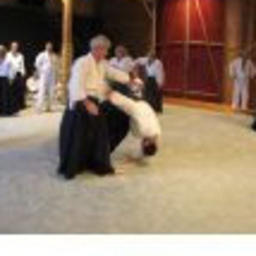
Prof. Dr. Thomas Christaller
5. Dan Aikikai(The company name is only visible to registered members)
- 53129 Bonn
- Germany
Personal information
- Haves
- New ideas and technologies for autonomous intelligent systems, software engineering Experiences in many sorts of reorganisation, coaching and empowering leaders. Being a leader myself in R&D for many years, I participated or initiated everything from reorganization, staffing, creating strategies, change in value systems, mergers, etc. Working as partner for Quest-Team since many years as lecturer for leadership seminars. Martial artist, practicing Aikido since 1972
Professional experience (30 years, 1 month)
-
-
Nov 2007
- present
(4 years, 7 months)
-
(The company name is only visible to registered members)
Industry: Health & Fitness, Education, Sports, Consulting
-
Nov 2007
- present
-
-
Dec 1989
- Feb 2010
(20 years, 3 months)
-
(Executive) Director Institute IAIS
Fraunhofer Gesellschaft e.V., http://www.iais.fraunhofer.de/
Industry: Research, Research & Development, Knowledge Discovery, Data Mining, Geographical Information Systems, Mobile Robots, Education, Nonlinear Controller, Machine Learning, Neural Networks, Embedded Data Mining
-
Dec 1989
- Feb 2010
-
-
Mar 2001
- Mar 2004
(3 years, 1 month)
-
GMD - Japan Research Laboratory
Industry: Research
-
Mar 2001
- Mar 2004
-
-
Jan 1982
- Dec 1984
(3 years)
-
Industry: Academia
-
Jan 1982
- Dec 1984
-
-
Jun 1977
- Dec 1981
(4 years, 7 months)
-
Industry: Academia
-
Jun 1977
- Dec 1981
- Employment status
- Employee
Educational background
- Jan 1982 - Jan 1986
-
Universität Hamburg
Informatics, Doctorate
Artificial Intelligence, Language Understanding using so-called Augmented Transition Networks
- Apr 1972 - Jun 1976
-
Universität Bonn
Mathematics, Informatics, Diploma in Mathematics
- Apr 1970 - Feb 1972
-
University of Marburg
Mathematics, Physics, Vordiplom
- Languages
- German, English
About me
I changed twice the focus of my research. From Natural Language Understanding to Knowledge-Based Systems to Behaviour-Oriented (Mobile) Robots. The first change was mostly motivated due to my change from Hamburg to GMD in 1985. At this time there was a kind of hype with the expert systems. We were lucky enough in my group to identify and conduct challenging research questions and to get a lot of funding for working on them. A major focus was on the ever changing and never to be completed knowledge base in an expert system. We worked on Expert System Tools like babylon (Franco di Primio, Hans Voss, and many more), Constraint Propagation (Hans-Werner Guesgen), Non-monotonic Logic (Gerd Brewka), Non-Linear Planning (Joachim Hertzberg), Knowledge Acquisition (Marc Linster, Werner Karbach, Joachim Diederich, Angi Voss) and Machine Learning (Katharina Morik and Stefan Wrobel). We also worked on topics what models and regularities were underlying the knowledge of an expert in a specific domain. We contributed some new ideas to the so-called KADS-methodology, developed by Bob Wielinga, and applied this to case-based reasoning for designing complex buildings. The most important result was on the self-assessment of an expert system with regard to its problem solving capabilities using a self-reflective architecture.
Since 1983 I had the idea to use robots for constructing artificial intelligence. But I had to wait until the early 90's to start with that type of research. In close collaboration with Kerstin Dautenhahn, who worked at my institute in these days, we developed ideas on "social intelligence", "emotion", and "empathy" as ingredients of such robots. Kerstin Dautenhahn organized the 1st European Workshop on Artificial Life at Schloss Birlinghoven.
But my own process of insight started when I discussed a simulation of a simple Braitenberg vehicle developed by Uwe Schnepf. We talked about what it would mean if the robot itself has access to its own simulation. A second source of inspiration came from my Aikido experiences. There and in other professional embodied activities like sports and dancing imagination, rehearsal, and forecasting of ones own and others movements is crucial. Out of this I formulated the idea that at the bottom of natural intelligence we find the capability for rehearsal (German: Probehandeln) of ones own movements as well as of others. Only years later I learned that around this time the concept of mirror neurons was developed by the group of Rizzolatti.
In the late 90's until 2002 our behaviour-oriented robotics research was focussing on walking machines, namely the Scorpion (Frank Kirchner), the programming of behaviours, and coupling behaviours with plans. Inspired by the Process Description Language PDL developed by Luc Steels mainly Herbert Jaeger together with others at the institute developed the so-called Dual Dynamics methodology and realized it as a programming language and environment (Ansgar Bredenfeld, Paul Plöger, Hans-Ulrich Kobialka, Peter Schöll, and many others). We applied the Dual-Dynamics approach mostly to the VolksBot robots and their forerunners to participate and compete in the RoboCup competitions (Martin Hülse, Keyan Zahedi). Some ideas of this approach were also used by Rául Rojas (FU Berlin) and Sven Behnke (University Bonn) in their robot teams for RoboCup.
The elegant and powerful concept to couple a symbolic level like a planner with a sub-symbolic level like the nonlinear differential equations used in Dual-Dynamics was developed by several researchers by the end of the last century (Uwe Zimmer, Herbert Jaeger, Joachim Hertzberg, Frank Schönherr). It is to my knowledge the most principled approach to understand the differences between both layers as well as how to make them work together without introducing a kind of delphi oracle to map plan operators onto motor commands and interpreting sensor data to figure out what is going on the outer world of the robot.
The last research project I was actively involved in was called OUTDOOR, funded by the German National Science Foundation DFG. The very idea was to bring together the demand for future RoboCup robots to play under natural circumstances like rough terrain, sunshine, and rain with the need to do mind reading of the opposing team members to figure out what they will do next by using the same moving and planning capabilities as the observing robot posseses and uses itself. Under the leadership of Frank Pasemann the young researchers like Yasutake Takahashi, Mario Negrello, Verena Thomas, and others were able to develop not only a theoretical concept for this but demonstrated this on functioning VolksBots at the RoboCup German Open in Hannover 2007.
Beside the exciting research I took over more and more so-called management responsibilities. Starting with a small group of five researchers in 1985 I am now co-directing an institute of ca. 270 persons with an 18 million € budget with 12 million € coming from contractual research and funding agencies. On this way I learned a lot of managing basic and applied research, forecasting the development of research topics and the need for applications, change management including mergers on a large scale, collaboration between economic enterprises small and big with research organisations, etc.
Today I am again changing my interests because I decided to spent much more time with Aikido then ever. To this end I co-founded the Zentrum für Bewegung & Lebenskunst. There I bring in much of my know-how and epxeriences made in the years before which finally are human-centered. Doing research on Artificial Intelligence means to me that one has a very good understanding of what natural intelligence is. Otherwise I feel very uneasy as an engineer to construct systems and call them artificially intelligent. Having worked my way through natural language, human knowledge, and the relationship between body & mind, I am most interested in how can a person live the life he or she wants to live (including myself). For me the highest level of human intelligence is wisdom and not being in command of as many data or information as possible. Have a look on our web site
Search the XING network
Find new business contacts on XING and get back in touch with old contacts!