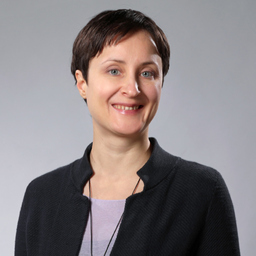

Dr. Yuliya Miloslavina
Fähigkeiten und Kenntnisse
Werdegang
Berufserfahrung von Yuliya Miloslavina
- Bis heute 5 Jahre und 11 Monate, seit Dez. 2020
Postdoctoral Researcher
TU Darmstadt
Supported scientific research on PHIP-NMR (parahydrogen-induced polarization nuclear magnetic resonance) measurements and preparation of different octreotides and knottins with PHIP labels by means of solid-state peptide synthesis. Conduct theoretical prediction of NMR spectra in order to compare with experimental data. Collaborate with other groups to extend the technique to bigger proteins. • Co-authored papers on parahydrogen induced polarization
- 1 Jahr und 8 Monate, Okt. 2021 - Mai 2023
Systems Dynamics Modeller
Downforce Technology
- 5 Jahre und 1 Monat, Feb. 2012 - Feb. 2017
Postdoctoral Researcher, FOM fellowship
University of Leiden
Resolved the structure of chlorosomes at high resolution by a combination of solid-state NMR, cryo-EM Fourier analysis and computer simulations. Designed and researched applications of chlorosomes and their mimics to bio-hybrid and bio-inspired devices for direct solar-to-fuel conversion. Implemented state-of-art NMR pulse sequences for structural analysis of chlorosomes. • Performed prediction analysis for NMR chemical shifts • Published a review at the Royal Society of Chemistry • Published a paper
- 2 Jahre und 4 Monate, Okt. 2009 - Jan. 2012
Postdoctoral Researcher, Marie-Curie Fellowship
Biological Research Center, Hungarian Academy of Sciences
Navigated computer modelling of VIS and IR transient absorption data. Performed anisotropic circular dichroism to define architecture of photosynthetic membranes and complexes by assessing secondary structure of proteins and performing studies of dynamic systems like folding and binding of proteins. Carried-out SAXS and SANS measurements to investigate conformational diversity within pigment-protein complexes. • Produced 3 papers • Led project to investigate light use efficiency in plants and algae
- 4 Jahre und 10 Monate, Nov. 2004 - Aug. 2009
PhD Scientist + Postdoc, Marie-Curie and SFB felloship
Max-Planck-Institute for Chemical Energy Conversion
Explained for the first time mechanisms of non-photochemical quenching in intact higher plant leaves and diatom cells in physiological conditions by time-resolved fluorescence spectroscopy. Studied primary energy and electron transfer processes in photosynthesis. Successfully analyzed and interpreted the extremely complex fluorescence decay kinetics. Identified two quenching sites active in regulation of photosynthetic light-harvesting. Published a model for the universal NPQ mechanism in plants and diatoms
Ausbildung von Yuliya Miloslavina
- 3 Jahre und 7 Monate, Mai 2005 - Nov. 2008
Mathematics and Natural Sciences
Heinrich-Heine-University in Düsseldorf
Interdisciplinary PhD in Mathematics and Natural Sciences Thesis: On the mechanisms of non-photochemical quenching in higher plants and diatoms
- 4 Jahre und 10 Monate, Sep. 1999 - Juni 2004
Chemistry. Researcher
Belarusian State University
Specialization in Physical Chemistry (Computational Chemistry) Lab of Statistical Thermodynamics Thesis: Correlations of the surface tension and the enthalpy of vaporization of molecular liquids Overall grade: excellent with distinction
Sprachen
Englisch
C1 (Fließend)
Deutsch
B1-B2 (Gute Kenntnisse)
Niederländisch
A1-A2 (Grundkenntnisse)
Russisch
C2 (Verhandlungssicher / Muttersprachlich)
XING Mitglieder mit ähnlichen Profilangaben
XING – Das Jobs-Netzwerk
Über eine Million Jobs
Entdecke mit XING genau den Job, der wirklich zu Dir passt.
Persönliche Job-Angebote
Lass Dich finden von Arbeitgebern und über 20.000 Recruiter·innen.
21 Mio. Mitglieder
Knüpf neue Kontakte und erhalte Impulse für ein besseres Job-Leben.
Kostenlos profitieren
Schon als Basis-Mitglied kannst Du Deine Job-Suche deutlich optimieren.